
Local Online Audio Advertising Will Grow 60% by 2029: 5 Steps to Get Your Share Before Your Competition Does
The audio advertising revolution is here, and smart advertisers are already positioning themselves to capture the explosive growth heading our way. While traditional media scrambles to adapt, we're seeing a fundamental shift in how consumers engage with audio content : and more importantly, how they respond to advertising within these intimate listening experiences.
At Ozark Star Media, we've been tracking the convergence of radio, streaming, podcasting, and digital audio advertising for years. What we're witnessing isn't just growth; it's a complete transformation of the advertising landscape that will separate industry leaders from those left behind.
The numbers tell a compelling story. Global audio advertising is projected to surge from $38.157 billion in 2025 to $51.110 billion by 2030, representing a robust compound annual growth rate that signals sustained momentum. In the United States specifically, digital audio advertising is expected to grow at 6.13% annually, reaching $9.64 billion by 2030. But here's what most advertisers are missing : local online audio advertising represents the fastest-growing segment within this expanding market.
Why Local Audio Advertising is the Opportunity of the Decade
Local businesses are finally waking up to what we've known all along: audio creates unmatched intimacy between brands and consumers. When someone chooses to listen to their favorite local radio station, podcast, or streaming playlist, they're inviting that content into their most personal moments : their morning commute, their workout, their evening wind-down.
This intimacy translates into advertising effectiveness that digital display and social media simply cannot match. We're talking about trusted voice delivering brand messages to highly engaged audiences who have already demonstrated loyalty to local content.
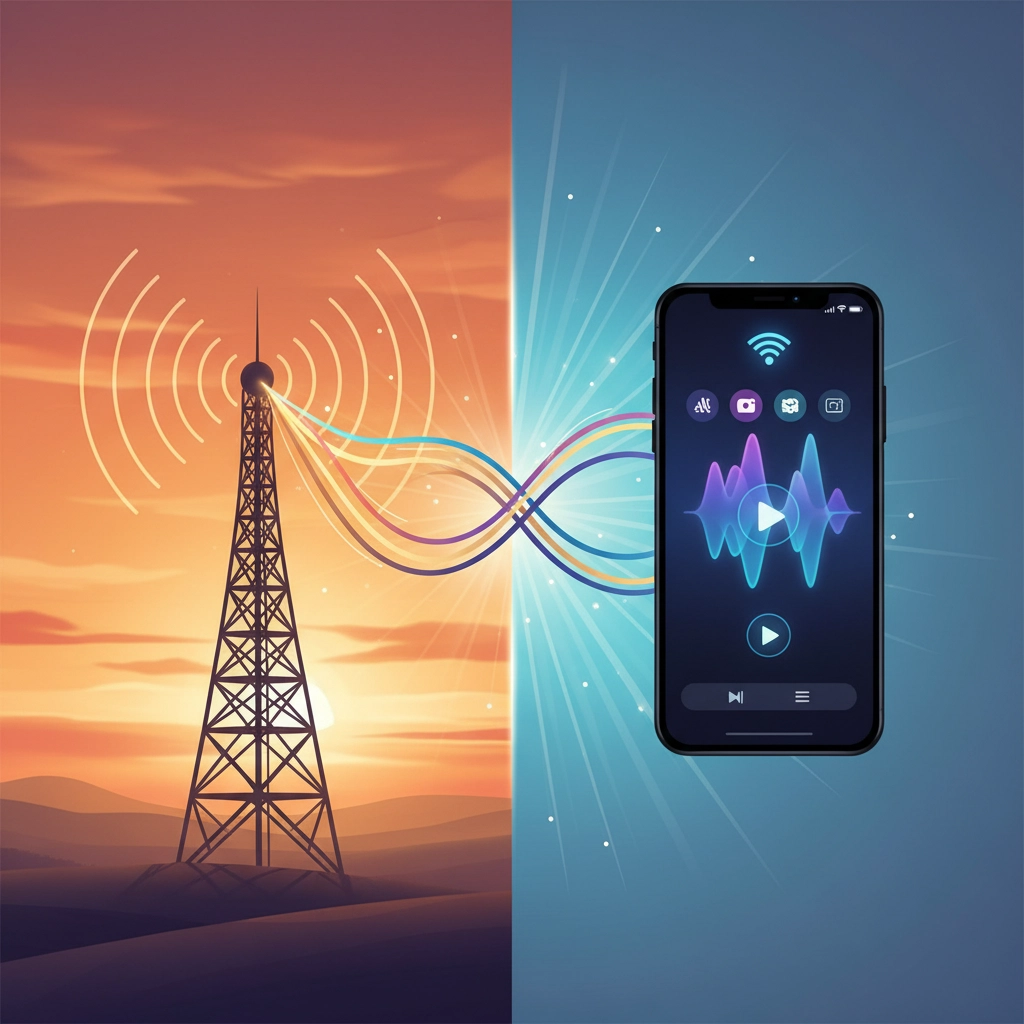
The competitive landscape is shifting rapidly. While national agencies chase broad demographic targets with generic messaging, local audio advertising allows for hyper-targeted campaigns that speak directly to community values, regional preferences, and neighborhood-level interests.
Step 1: Transform Your On-Air Credibility into Digital Advertising Power
Your existing radio personalities and brand reputation represent untapped goldmines for digital advertising success. The key is leveraging the trust you've already built with your audience to promote integrated advertising solutions that extend far beyond traditional radio spots.
We recommend implementing what we call the Trust Transfer Strategy : using your most beloved on-air personalities to introduce advertisers' digital campaigns during peak listening periods. Instead of generic sales pitches, these endorsements should feature real customer testimonials and concrete data demonstrating how radio and digital work together.
For example, when 99.5 The Star introduced their integrated advertising packages, we saw immediate results by having morning show hosts share specific success stories from local businesses who had experienced measurable growth through multi-platform campaigns. This approach transformed advertising sales from cold outreach into warm referrals backed by established credibility.
Step 2: Master the Art of Strategic Differentiation
The competition for digital advertising dollars has never been fiercer. Local businesses are being courted by everyone from Google Ads representatives to national media buying agencies. Your competitive advantage lies not in matching their offerings, but in highlighting what makes your approach fundamentally superior.
We focus on three key differentiators that consistently win client loyalty:
Market Expertise : National agencies may have bigger budgets, but they don't understand your local market like you do. We know which neighborhoods respond to country music messaging, which demographics prefer morning versus evening ad placement, and how local events and seasonal trends impact advertising effectiveness.
Quality Over Quantity : While competitors emphasize reach metrics, we demonstrate engagement quality. Our local audio advertising delivers higher attention rates, better brand recall, and stronger emotional connection than broad-based digital campaigns.
Integrated Campaign Mastery : We don't just sell radio spots or digital ads; we create comprehensive campaigns where every touchpoint reinforces the others. This unified approach delivers exponentially better results than fragmented advertising efforts.

Step 3: Embrace the Integrated Advertising Revolution
The most successful local advertising campaigns we've developed combine traditional radio's broad reach with digital precision targeting. This isn't about replacing one medium with another : it's about creating advertising ecosystems where each component amplifies the others.
Radio delivers emotional connection and broad market awareness, while digital enables specific targeting, retargeting, and detailed performance measurement. When these strategies work together, we see campaign performance that exceeds the sum of their individual parts.
We recommend structuring integrated campaigns with clear budget allocation guidelines: typically 60% radio for brand awareness and emotional engagement, 40% digital for targeted follow-up and conversion optimization. This ratio allows advertisers to maximize both reach and precision while maintaining cost efficiency.
Post-campaign analysis consistently shows that businesses using integrated approaches achieve 40-60% better results than those relying on single-channel strategies. More importantly, these campaigns build lasting brand recognition that continues delivering value long after the initial advertising period ends.
Step 4: Harness AI-Powered Personalization for Maximum Impact
Artificial intelligence has transformed local audio advertising from broad demographic targeting to individual-level personalization. We're now able to deliver the right message to the right listener at precisely the right moment : creating advertising experiences that feel like helpful recommendations rather than interruptions.
AI-enabled programmatic buying automates ad space purchases while increasing efficiency and reducing costs. More importantly, it allows us to test and optimize campaigns in real-time, ensuring every advertising dollar delivers maximum impact.

The key is using AI to enhance rather than replace human creativity and local market knowledge. We combine sophisticated targeting algorithms with compelling storytelling that resonates with regional values and community connections.
For instance, our AI systems can identify listeners who are most likely to respond to specific offers based on their listening patterns, time of day, and historical engagement data. But the actual ad content : the voice, the message, the emotional appeal : comes from our deep understanding of what motivates local audiences.
Step 5: Capitalize on the Podcast and Streaming Audio Boom
The explosive growth in podcast listenership and music streaming represents the final frontier for local audio advertising dominance. These platforms deliver the highest engagement rates we've ever measured, with listeners actively choosing content and remaining attentive throughout advertising messages.
Podcast advertising offers unique advantages: listeners develop personal relationships with hosts, creating trust that transfers to advertiser recommendations. Streaming audio allows for dynamic ad insertion based on real-time data about listener preferences and behaviors.
We're developing podcast sponsorship programs that go beyond traditional advertising to create authentic partnerships between local businesses and content creators. These collaborations produce advertising that listeners actually enjoy : building positive brand associations rather than message fatigue.
The interactive audio formats emerging in 2025 will revolutionize how consumers engage with advertising. Voice-activated responses, clickable audio ads, and integrated e-commerce functionality transform passive listening into active engagement opportunities.
Your Competitive Window is Closing Fast
While we're sharing these strategies openly, the reality is that early adopters will capture disproportionate market advantages. Local audio advertising success requires infrastructure, relationships, and expertise that take months to develop properly.
The businesses that begin implementing comprehensive audio advertising strategies now will establish market positions that become increasingly difficult for competitors to challenge. Every month of delay represents lost opportunities and harder battles for market share.
We've seen this pattern repeatedly in digital marketing evolution : the companies that recognized and adapted to new opportunities early became market leaders, while those that waited found themselves fighting for scraps in oversaturated competitive landscapes.
Ready to Capture Your Share of the Local Audio Advertising Explosion?
At Ozark Star Media, we're not just observers of this transformation : we're active participants helping local businesses and regional brands capture their share of explosive growth in audio advertising.
Our integrated advertising packages combine the emotional power of radio with digital precision targeting, AI-powered optimization, and emerging audio technologies to deliver campaigns that exceed traditional performance metrics.
If you're ready to move beyond conventional advertising approaches and start capturing the local audio advertising opportunity, we'd love to discuss how our proven framework can accelerate your growth. Contact our advertising team to explore custom packages designed for your specific market position and growth objectives.
The 60% growth projection isn't just a prediction : it's an invitation to participate in the future of local advertising. The question isn't whether this growth will happen, but whether your brand will be positioned to benefit from it.