

Radio Vs TikTok Marketing: Which Delivers Better ROI for Your Brand in 2026?
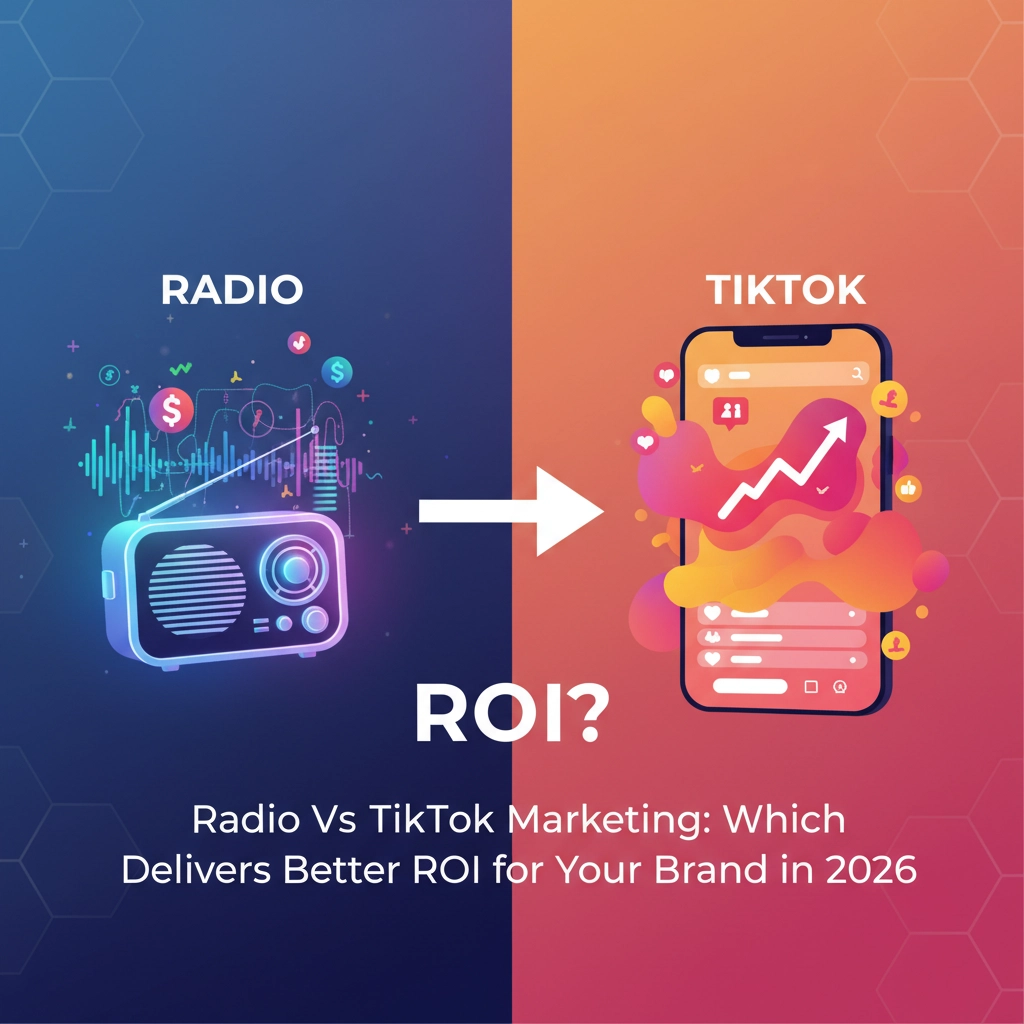
The marketing landscape of 2026 presents us with a fascinating crossroads : traditional radio's proven reliability versus TikTok's digital dynamism. As we navigate this evolving terrain, the question isn't simply which platform costs less, but which delivers measurable results that translate into real business growth.
After analyzing comprehensive data from Nielsen, Dentsu, and emerging 2026 market trends, we've discovered that the ROI battle between radio and TikTok isn't as straightforward as many marketers assume. The winner depends entirely on your specific goals, audience, and how you define success.
Radio Marketing: The Steady Performer That Keeps Delivering
Radio advertising continues to demonstrate remarkable resilience in 2026, delivering an impressive $10 return on advertising spend on average : making it one of the most consistent performers in traditional media. What makes radio particularly compelling is its ability to reach audiences during their most predictable moments: the daily commute, morning routines, and those transitional periods when people are most receptive to messaging.
The numbers tell a compelling story. Companies utilizing radio advertising see a 23% greater return on marketing spend compared to those who don't, while radio spots can boost market share by an impressive 28%. According to Nielsen's Global Compass database, radio delivers the second-highest ROI at $2 per dollar spent, trailing only social media at $2.22.

But radio's strength extends beyond raw numbers : it's about trust and community connection. In 2026, as consumers become increasingly skeptical of digital advertising, radio maintains its credibility through established relationships with local personalities and trusted voices. This translates into meaningful action: 7% of consumers make immediate purchases after hearing radio ads, a rate that speaks to the medium's persuasive power.
The cost efficiency remains attractive, with CPM rates ranging from £8-25 and typical response rates of 0.5-2%. For time-sensitive offers targeting commuter audiences, radio continues to excel : particularly when you need broad reach across established demographic segments who value routine and consistency.
TikTok Marketing: The Digital Powerhouse Redefining Engagement
TikTok has evolved far beyond its dancing teenager origins, emerging as a sophisticated advertising platform that delivers results traditional marketers didn't think possible. The platform's short-term ROI of 11.8% might seem modest compared to radio's $10 return, but here's where the comparison becomes nuanced: TikTok drives 2× stronger efficiency than television and delivers 96% higher return on ad spend than other digital channels.
The engagement metrics are simply staggering. TikTok boasts engagement rates as high as 7.5% for smaller creators, obliterating Instagram's 3.65% and creating opportunities for authentic brand storytelling that resonates with younger demographics. With a CPM of $9.16 and cost-per-click around $1.00, the platform offers accessible entry points for businesses of all sizes.
What sets TikTok apart in 2026 is its algorithmic sophistication : the platform's ability to surface content to highly relevant audiences without geographic constraints. While this global reach can be a limitation for purely local businesses, it represents unprecedented opportunity for brands seeking to scale beyond traditional boundaries.
The immediate purchase rate of 5% might trail radio's 7%, but TikTok's strength lies in building long-term brand awareness and consideration through viral potential. A single well-crafted TikTok can generate organic reach that extends far beyond paid spend : something traditional radio simply cannot replicate.
The ROI Showdown: Comparing Apples to Algorithms
When we examine pure return on investment, both platforms excel in different dimensions. Radio's strength lies in its predictable, measurable impact on market share and immediate sales conversion. The medium's ability to generate $10 for every dollar spent reflects decades of optimization and understanding of consumer behavior patterns.
TikTok's ROI story is more complex but equally compelling. While immediate purchase rates remain lower, the platform's ability to generate exponential organic reach means your advertising investment can compound in ways traditional media cannot match. The 96% higher ROAS compared to other digital channels positions TikTok as a disruptive force in digital advertising efficiency.
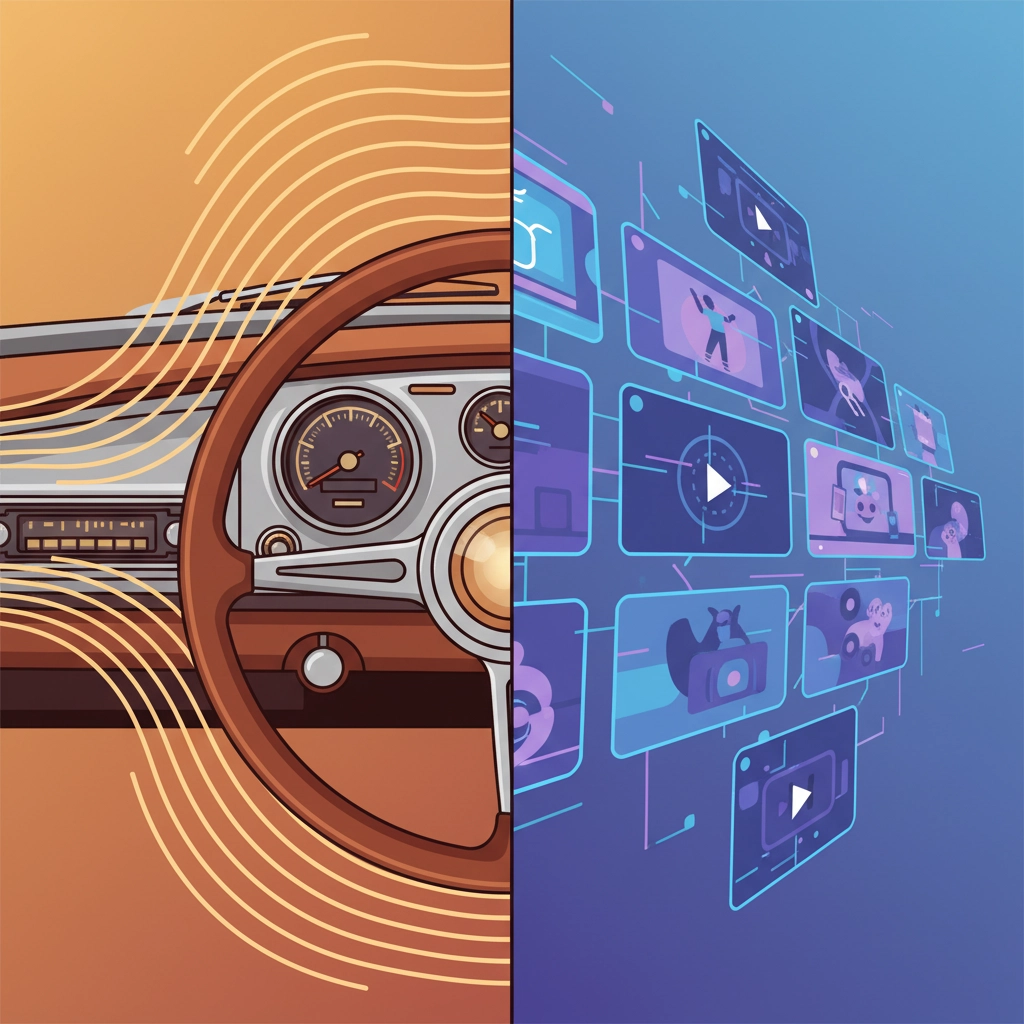
Cost considerations reveal interesting patterns. Radio's £8-25 CPM competes favorably with TikTok's $9.16, but the comparison isn't entirely fair : radio CPMs represent broad demographic targeting, while TikTok offers granular audience segmentation and behavioral targeting that can dramatically improve conversion rates for specific products or services.
The measurability factor heavily favors TikTok, with built-in digital tracking providing real-time campaign performance data. Radio requires sophisticated attribution mechanisms to properly measure impact, though companies like Ozark Star Media have developed advanced methodologies to bridge this gap.
Strategic Deployment: When to Choose Radio vs TikTok in 2026
The decision between radio and TikTok shouldn't be binary : it should be strategic. Radio excels when your target audience includes commuters, older demographics, and consumers who prefer routine-based media consumption. If you're promoting time-sensitive offers requiring quick action, radio's 7% immediate purchase rate and community trust factor make it the superior choice.
Choose radio when you need strong market share lift across broad audiences, when you're building local community connections, or when your business model depends on geographic specificity. The medium's ability to reach audiences during predictable moments : like morning commutes or afternoon routines : creates opportunities for consistent message reinforcement that builds lasting brand recognition.

TikTok becomes the preferred platform for younger demographics, viral potential, and engagement-focused brand building. If you need highly measurable, real-time campaign performance data, TikTok's digital infrastructure provides transparency that traditional media cannot match. The platform's cost efficiency and high engagement rates make it ideal for businesses with limited budgets seeking maximum impact.
The platform particularly excels for brands building awareness and consideration rather than immediate sales conversion. TikTok's algorithm rewards authentic, entertaining content that provides value beyond direct advertising : creating opportunities for organic reach that can exponentially multiply your investment.
The Winning Strategy for 2026: Integration Over Competition
The most sophisticated marketers in 2026 aren't choosing between radio and TikTok : they're strategically combining both to create complementary media ecosystems. Research shows that shifting just 10% of budget from television and digital to AM/FM radio can spike overall reach by 20%, while adding audio to a media mix generates double-digit gains throughout the entire buy.
The optimal approach uses radio for broad awareness and community trust building while deploying TikTok for engagement, viral potential, and demographic-specific targeting. This creates a powerful synergy where radio's credibility and TikTok's engagement work together to maximize total ROI across different audience segments and campaign objectives.

At Ozark Star Media, we've observed that clients who integrate both platforms achieve superior results compared to single-channel approaches. Radio builds the foundation of trust and awareness, while TikTok amplifies messaging through engagement and viral potential : creating a marketing ecosystem that leverages the unique strengths of both traditional and digital media.
The future belongs to marketers who understand that ROI isn't just about immediate returns : it's about building sustainable, multi-channel relationships with audiences across their preferred platforms. In 2026, the smartest brands aren't asking whether radio or TikTok delivers better ROI. They're asking how to leverage both platforms to create integrated marketing experiences that drive measurable business growth.
Whether you're just beginning to explore these opportunities or looking to optimize existing campaigns, the key lies in understanding your specific business objectives and matching them to each platform's unique strengths. The ROI battle between radio and TikTok ultimately isn't about declaring a winner : it's about discovering how both can contribute to your brand's success story.